Before Alcúdia was called Alcúdia, the Romans settled there and called the place Pollentia. That was some time after 123 B. C., the year in which Quintus Caecilius Metellus landed there, arriving from Rome to claim this island for the Roman Empire. Pollentia was to become the island capital and soon had an important role in the western Mediterranean Sea. The ruins of Pollentia represent the best preserved Roman remains on our island, with the exception of perhaps the Pont Romà, in Pollença. The Pollentia site was discovered in the 17th century, and proper research started there in the 1930s. Archaeologists have so far uncovered three main areas: a residential quarter, the city forum and the Roman theatre.
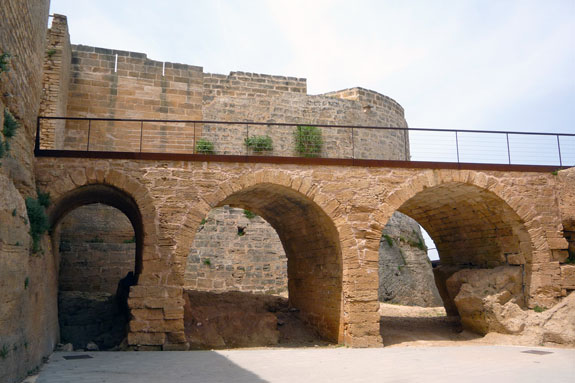
Moorish and Berber settlers came to the area of today’s Alcúdia shortly after 902 A. D. and founded an alqueria (farm) called al-Kudi, which over the years developed into a larger settlement. Sometime during the 11th century, the Islamic settlers built a bridge, shown here. Only a few years ago, this bridge was discovered and unearthed when the moat of the town’s fortifications was cleaned and restored. Not many relics remain in Mallorca from the Arab period; the bridge in Alcúdia is probably the most significant find, together with the Banys Arabs in Palma’s old town.
The photo was chosen from my archive. It was taken in Alcúdia, Mallorca, Baleares, Spain. The date: May 22nd, 2009. The time was 12:53:35.


 The Mallorca Photo Blog