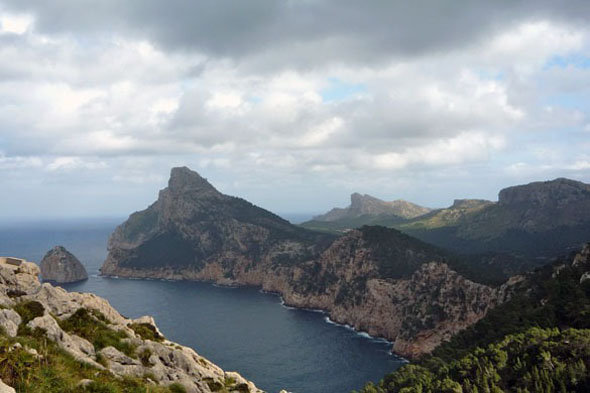
The Serra de Tramuntana is in all likelihood the single feature in Mallorca’s landscape that most defines our island. The impressive mountain range runs for some 90 km from Sant Elm to the Formentor peninsula, with the rocky outcrops of Sa Dragonera and Cap de Formentor at either end. The Serra has ten proud peaks with heights of over 1,000 m, of which most are concentrated in the area around Lluc; the highest of its peaks are Puig Major (1,445 m) and Puig Massanella (1,349 m).
There are so many different treasures to discover within the Tramuntana that one blog entry can not do justice at all, but let me mention the Monasterio de Nuestra Señora de Lluc (monastery of Lluc), the Ruta de Pedra en Sec (Dry Stone Route) running along the GR-221 route for the most part, the Torrent de Pareis, one of Mallorca’s two Natural Monuments, and Planícia, a magnificent Finca Pública near Banyalbufar.
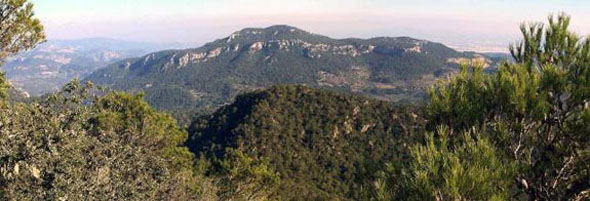
Recently, the Consell de Mallorca has put forward an application with UNESCO to have the Serra de Tramuntana declared within the catalogue of United Nations World Heritage sites. To that end, a new website was designed by the Consell on the occasion of this candidature. Sadly, the very useful website is only available in two language versions, Catalan and Castilian. As usual, there are no English, German, French or Scandinavian explanations (no offense is intended towards our visitors with a Dutch, Italian, Greek or Portuguese cultural background). Will the mandarins of the Consell de Mallorca never learn that there are some 12,000,000 visitors coming to this island year after year, most of whom do not master either of the two local idioms, at least not in a sufficient manner?
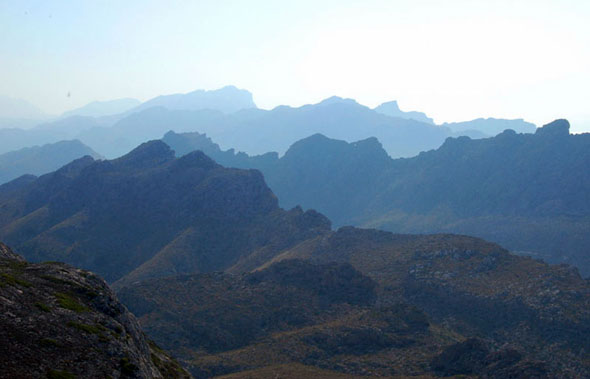
The photo (top) was chosen from my archive. It was taken near Formentor, Mallorca, Baleares, Spain. The date: February 14th, 2009. The time was 16:16:33. The photos (centre and bottom) were taken from the Internet. Thanks are due to the Consell de Mallorca.
Moltes gràcies.


 The Mallorca Photo Blog